
Sediment microbiome

Sediment microbiome
Sediment microbiome

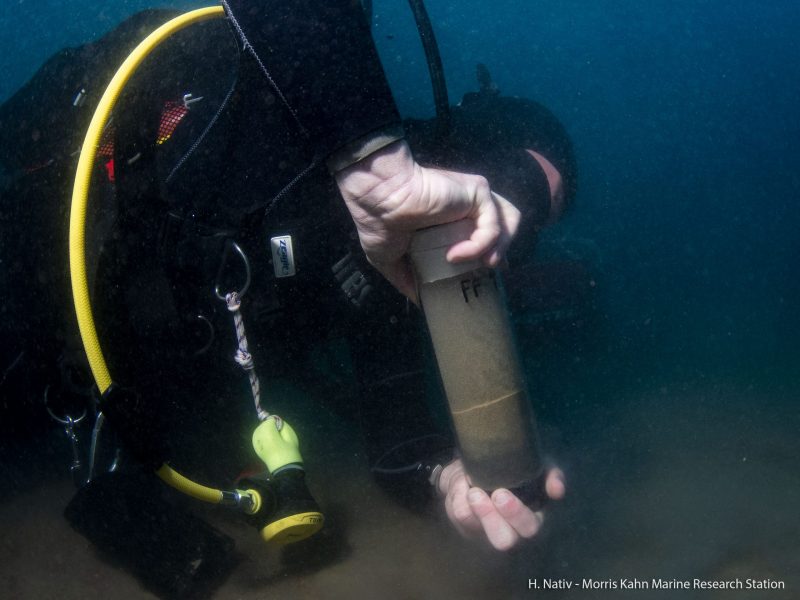
Sediment Microbiome Our dataThe monitoring is carried out twice a year, along four depth transects (10, 25, 45, and 100 m). Two cores from each depth are taken by diving or box corer, and each core is sliced into a few layers (up to 10 cm). Then, DNA is extracted from each layer and analyzed in order to characterize the bacterial, archaeal and eukaryotic communities. The attached tables includes details…

Continue ReadingSediment microbiome

Water chemistry

Water chemistry
Water cemistry

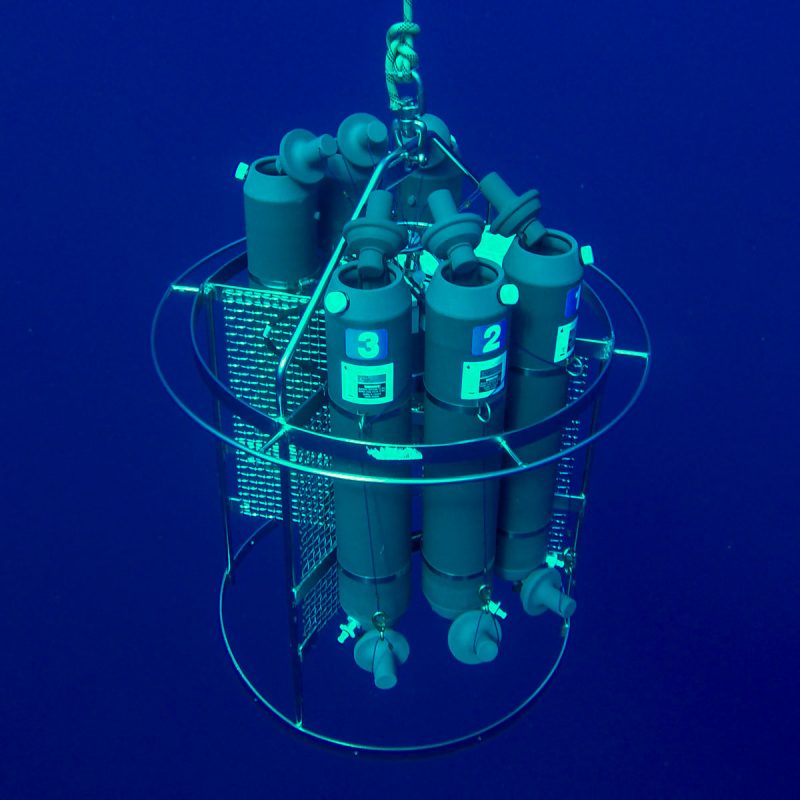
This dataset contains primarily oceanographic data and nutrient concentrations during our seasonal coastal transect cruises and off-shore projects. Profiles from 10 m to 100 m depth contours across from Maagan Michael (TSY) using a rosette and CTD (conductivity-temperature-depth).

Continue ReadingWater chemistry

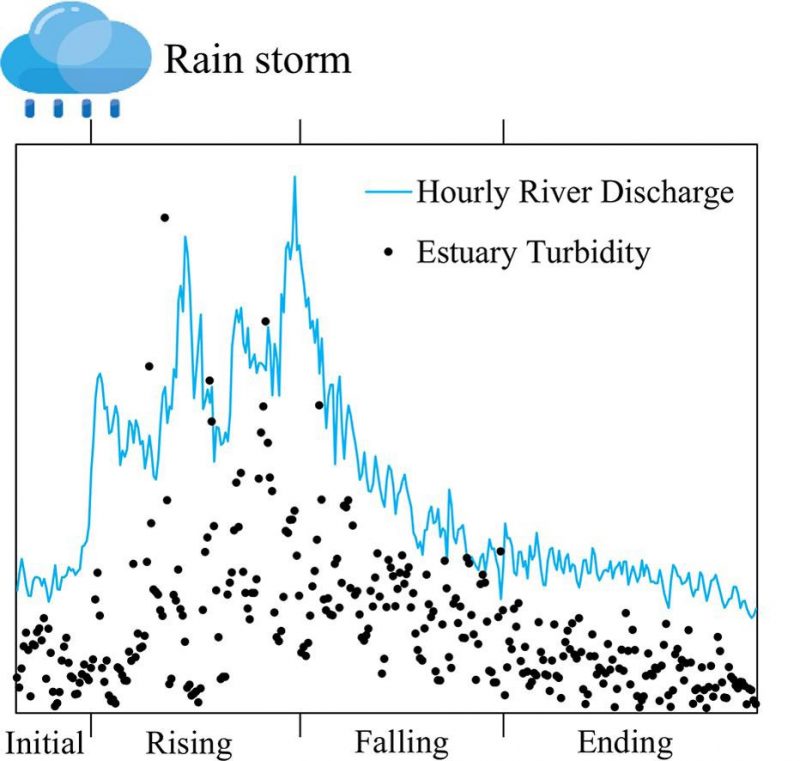
Simultaneous observations revealed the non-steady state effects of a tropical storm on the export of particles and inorganic nitrogen through a river-estuary continuum

Simultaneous observations revealed the non-steady state effects of a tropical storm on the export of particles and inorganic nitrogen through a river-estuary continuum Michael D. Krom An important consequence of storms in river-estuary systems is major changes in hydrology and nutrients being fluxed from the land to the coastal ocean. During storms, sediments deposited in estuaries during normal flow, are resuspended adding DIN to the extra nitrogen fluxing down the river. Additional nitrate was added to the estuary by leaching from adjacent soils and groundwater, nitrification, and less denitrification. Storms increase total nitrogen flux to coastal areas, with relatively more ammonium export during increasing hydrography.

Continue ReadingSimultaneous observations revealed the non-steady state effects of a tropical storm on the export of particles and inorganic nitrogen through a river-estuary continuum

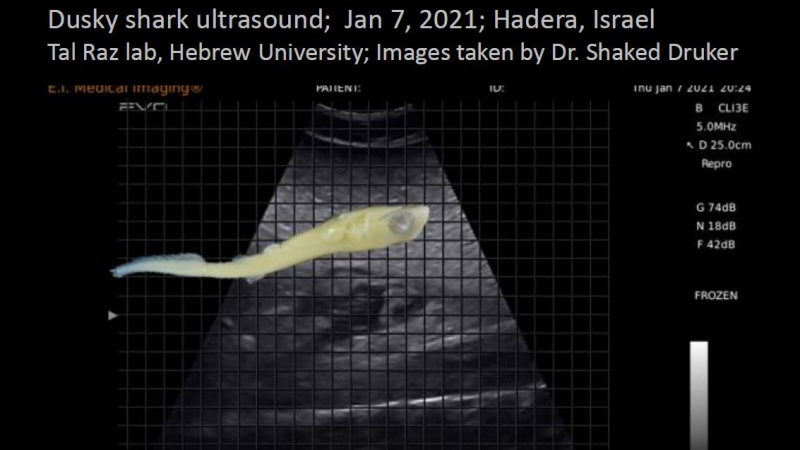
Reproduction of Dusky Sharks

 The winter aggregation of sharks near the Orot Rabin power plant is largely composed of large, female dusky sharks and smaller, male sandbar sharks. It is, therefore, possible that the female sharks are using the warmer waters of the effluent at some stage of their reproductive cycle.  In 2016, a pregnant dusky shark washed ashore near Hadera with 8 mid-stage fetuses in her uterus. Further evidence of pregnant sharks was…

Continue ReadingReproduction of Dusky Sharks

Impacts of shipping Underwater Radiated Noise on the behavioral of aquatic animals

Roee Diamant, Dep. of Marine Technologies. Aviad Scheinin, The Morris Kahn Marine Research Station.  University of Haifa.Aquatic animals rely on underwater sound for critical life functions such as localization, communications, foraging, and mating.With the large increase in human marine activity, our seas have become populated with boats and ships projecting underwater radiated noise (URN) of extremely high power that propagates over areas of sometimes 20 square km.The effects of shipping…

Continue ReadingImpacts of shipping Underwater Radiated Noise on the behavioral of aquatic animals

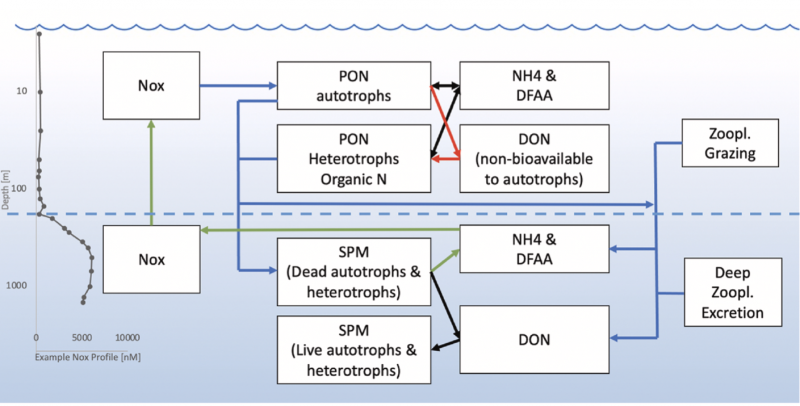
Seasonal nutrient dynamics in the P depleted Eastern Mediterranean Sea

 HighlightsFirst seasonal high sensitivity nutrients in the Pelagic Eastern Mediterranean.Excess Nitrate during winter mixing decreasing to Nutrient depleted in late stratified season.Phosphate depleted entire year with low DOP (40-30 nM) in photic zone.The measured N:P ratio depends on seasonality and not just location.Calculated Export Production and other biogeochemical properties confirm EMS behaves like a P depleted ocean gyre. AbstractThe Eastern Mediterranean Sea (EMS), is ultra-oligotrophic with unusual anti-estuarine circulation. It is P…

Continue ReadingSeasonal nutrient dynamics in the P depleted Eastern Mediterranean Sea

Marine pathology microbial communities

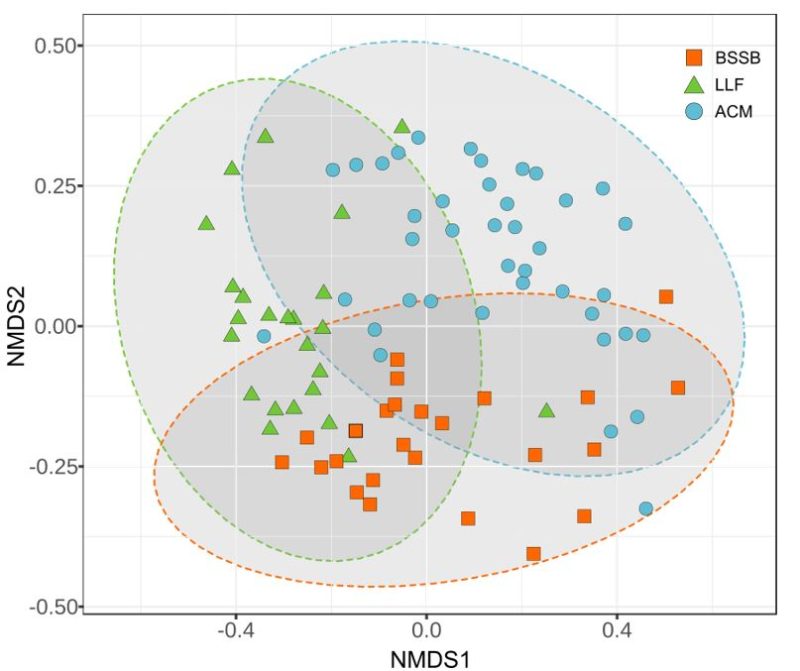
In our continuous effort to monitor pathogens in the Mediterranean Sea, we examined the microbial communities within the gills of 89 samples, belonging to three common wild fish species (Bluespotted Seabream, Lessepsian Lizardfish and Atlantic Chub Mackerel). The fish were caught several kilometers off the shores of Ashdod at depths of 20-80m, and all appeared to be healthy when sampled. Gills' tissue was processed and went through 16S rRNA NGS…

Continue ReadingMarine pathology microbial communities